Crimean Economy: Tourism Grows Amidst 80% Inflation Spike
"The demographic landscape of the Crimean Peninsula underwent a fundamental shift in 2014, redefining the region's identity and administrative reality."
The transition of the peninsula has left a complex trail of statistical data regarding its people, their political leanings, and the economic shifts that followed. Understanding these numbers is essential for grasping the current regional dynamics.
* The 2014 referendum showed overwhelming support for the new status, with 96.77% of voters participating in the transition. * Economic shifts included significant inflation and a 2.5x rise in local food prices following the annexation. * Security shifts saw 10% of the Security Service of Ukraine personnel depart the peninsula. * Domestic approval in Russia saw a notable rise, with President Putin's rating reaching 71.6% following the crisis.
Who actually lives in Crimea? A researcher sits in a quiet library, flipping through census reports and demographic charts that trace the peninsula's changing identity. The numbers on the page tell a story of ethnic and linguistic layers that have existed for decades.
The linguistic profile of the peninsula is heavily weighted toward Russian speakers. According to the 2014 census findings, the distribution of self-identified native languages shows a significant majority identifying as Russian-speaking.
Other groups, including Crimean Tatars and those identifying as Ukrainian, form smaller but distinct portions of the demographic fabric.
The religious landscape also provides a clear picture of the social structure. As of 2013, the religious breakdown showed that Orthodox Christianity was the predominant faith.
This was followed by a significant Muslim population, while a portion of the residents identified as having no specific religion. These cultural pillars heavily influence the social cohesion and local traditions of the peninsula.
The interplay between language and religion often dictates the social nuances of different districts. While the majority share certain cultural traits, the minority groups maintain distinct communal identities.
But how did these cultural layers translate into political action during the transition?
How was the political sentiment during the 2014 referendum?
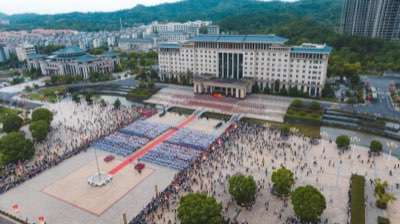
A crowd gathers in a central square, the air thick with anticipation as the results of a historic vote are prepared for announcement. People watch the screens, waiting to see how their expressed will will shape the future of their homes.
The political sentiment during the 2014 referendum was characterized by a strong desire for self-determination among the local population. A survey conducted by the Pew Research Center in 2014 indicated that 54% of Crimean residents supported the right of regions to secede.
This sentiment was accompanied by a high level of confidence in the process itself.
The belief in the legitimacy of the vote was remarkably high according to the same Pew Research Center findings. Specifically, 91% of respondents believed the referendum was free and fair, while 88% believed that the government in Kyiv ought to recognize the results of the vote.
On the day of the event, March 16, 2014, organizers reported that a large majority, specifically 96.77% of voters, participated in the referendum regarding the peninsula's status.
These figures suggest a population that viewed the transition as a legitimate exercise of regional will. The high level of consensus recorded in these surveys highlights the divergence between local sentiment and international perspectives.
| Metric | Percentage/Value |
|---|---|
| Support for right to secede | 54% |
| Belief referendum was free/fair | 91% |
| Belief Kyiv should recognize results | 88% |
| Reported voter participation/result | 96.77% |
The massive shift in political status was only the beginning of the upheaval.
What is the state of Crimea's economy and infrastructure? A shopkeeper in a coastal town adjusts the price tags on the shelves, noting how much more expensive goods have become compared to the previous year. The cost of living has become a daily calculation for every household.
The economic transition brought significant volatility to the peninsula's markets. Following the annexation, the region faced substantial inflationary pressures. By March 2015, reports indicated an 80% inflation rate, which placed heavy pressure on the local economy.
This economic shift was felt most acutely at the dinner table, where local food prices saw a 2.5x rise.
Despite these economic hurdles, the tourism sector showed signs of resilience and growth. In 2015, the peninsula saw 2.02 million tourists, which represented a 16.5% increase from the previous year.
This influx of visitors provided a vital economic lifeline, even as the cost of living for permanent residents continued to climb.
The tension between rising costs and tourism-driven growth creates a unique economic environment. While visitors bring capital, the local population must navigate much higher costs for basic necessities.
However, moving from political shifts to economic survival required a massive change in how the region was secured.
What is the context of the military and security presence?
A soldier stands guard at a checkpoint, looking out over a landscape that has become heavily militarized. The transition of authority has left a clear footprint in the personnel moving through the streets.
The movement of security and military personnel was one of the most immediate consequences of the 2014 transition. Following the annexation, there was a notable shift in the composition of security forces.
According to official Ukrainian figures from February 2016, 10% of the Security Service of Ukraine personnel left Crimea.
This departure was not limited to the security services alone. The transition also involved the movement of much larger military bodies. It was reported that 6,000 personnel left alongside the 20,300-strong pre-annexation Ukrainian army.
This reshuffling of personnel marked the end of the previous administrative and military structure.
The departure of these personnel represented a complete overhaul of the regional security architecture. What was once a unified command structure under Kyiv was replaced by a new framework entirely.
But while the borders were being secured, the political landscape in the mainland was also reacting.
What is the political climate within Russia regarding the annexation?
A news anchor in Moscow reads the latest polling data, noting the surge in public support for the government's recent geopolitical moves. The numbers reflect a nation responding to a period of intense crisis.
The political climate within Russia saw a significant shift in public opinion following the events in Crimea. Domestic approval for the leadership saw a measurable increase as the crisis unfolded.
According to a poll conducted by the All-Russian Center for Public Opinion Research and released on March 19, President Putin's approval rating increased by nearly 10% since the crisis began.
This surge brought his approval rating up to 71.6%, which was the highest level recorded in three years at that time. The data suggests that the annexation was viewed by a large portion of the Russian public as a successful realization of national interest.
This domestic support provided a political mandate that influenced how the transition was managed internally. The surge in approval acted as a stabilizer for the government during a period of international tension.
Whenever I look at these massive shifts in authority, I wonder how much of the local identity was preserved versus how much was overwritten by the new administration.
What are the modern communication and connectivity realities?
A young professional sits in a cafe, scrolling through a smartphone while connected to a local mobile network. Even in a changing political landscape, the digital connection remains a constant necessity.
The transition has required significant updates to the peninsula's telecommunications and digital infrastructure. As the region integrated into new administrative frameworks, the necessity for stable mobile network coverage and digital connectivity became paramount.
Modern connectivity is essential for both the local economy and the massive tourism industry. While the transition involved moving between different regulatory environments, the goal has remained the expansion of digital penetration to support the growing population and the influx of travelers.
The evolution of these networks is a key part of the peninsula's modern identity. Digital connectivity serves as the bridge between the local reality and the wider world.
It is important to note that these economic and digital shifts do not apply to all regions equally. While coastal tourist hubs might see rapid infrastructure growth, more remote or ruggedly mountainous areas may still struggle with the same level of connectivity and cost-of-living pressures.
Summary Checklist of the 2014 Transition
- Identify Demographic Shifts: Analyze the linguistic and religious changes in the local population.
- Evaluate Political Legitimacy: Review the referendum results and the level of public support recorded in surveys.
- Assess Economic Impact: Track inflation rates and the rise in local commodity prices.
- Monitor Security Changes: Account for the movement of military and security personnel.
- Observe Domestic Reaction: Look at how regional changes affect approval ratings in the governing nation.
FAQ
How much did food prices increase in Crimea after 2014? Following the annexation, local food prices experienced a 2.5x rise.
What was the level of support for the referendum according to the organizers? The organizers reported that 96.77% of voters participated in the referendum regarding the peninsula's status.
How did the approval rating for the Russian presidency change? According to the All-Russian Center for Public Opinion Research, the approval rating increased by nearly 10%, reaching 71.6%.
How many Ukrainian military personnel left the peninsula? It was reported that 6,000 of the pre-annexation 20,300-strong Ukrainian army left the peninsula.
The demographic and economic data of the Crimean Peninsula reveals a region in the midst of a profound transition.
From the shifts in religious and linguistic identity to the massive changes in economic stability and security presence, the numbers tell a story of a landscape being rebuilt. Understanding these statistics is the first step in understanding the complex reality of the region today.


Comments 0