Infrastructure Drives Legitimacy in Russia's Federal System
"The strength of a central government is often measured not by its capital's skyline, but by its ability to reshape the distant provinces to match its vision."
The relationship between Moscow's central authority and its vast federal districts is a delicate balance of resource allocation, administrative control, and political survival. This interplay determines whether a development project succeeds or becomes a source of regional instability.
* Top-Down Governance: Federal development goals are set in Moscow and cascaded down through administrative hierarchies to ensure nationwide uniformity. * ly Political Alignment: The dominance of the ruling party, United Russia, acts as the glue that translates high-level policy into regional legislative reality. * Legitimacy through Infrastructure: Successful regional development serves as a tangible metric of political competence, reinforcing the legitimacy of the central framework. * Centralized Tension: Conflict often arises when federal mandates ignore local economic realities, creating friction between regional governors and the Kremlin.

How Does Centralized Planning Translate into Local Reality?
At dawn, a weary administrator wipes sweat from his brow while staring at a blueprint that clashes with the dusty, broken road outside his office window.
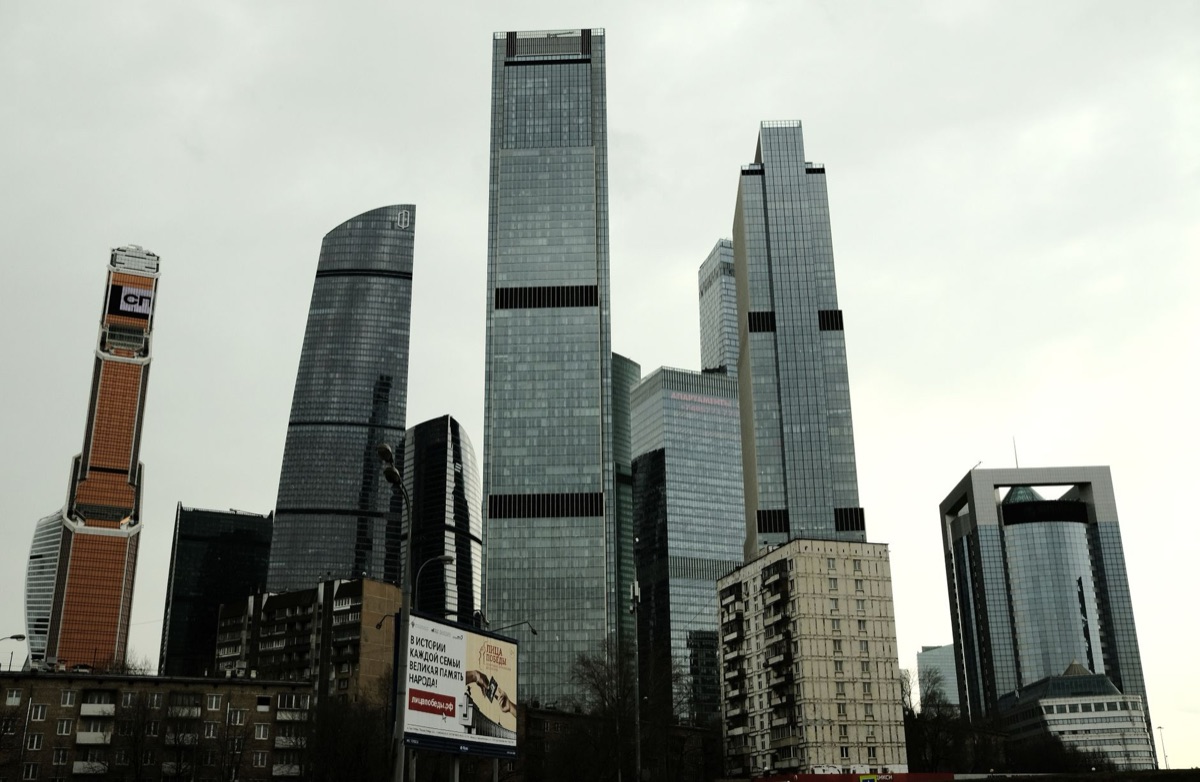
A thick folder of blueprints sits on a heavy oak desk in a regional administrative building, miles away from the Kremlin. The ink is fresh, but the directives contained within were drafted in a high-rise in Moscow.
The Russian political structure relies on a top-down approach where development goals are established at the federal level and then handed down to regional bodies.
This ensures that strategic priorities, such as energy infrastructure or transport corridors, remain consistent across the country's massive geography.
To ensure these goals are met, the federal government utilizes specific administrative mechanisms. These include budget allocations, oversight committees, and the appointment of regional heads who are accountable to the center.
This hierarchy is designed to prevent regional autonomy from drifting into political fragmentation.
However, there is often a gap between these theoretical goals and ground-level reality. While a plan might call for a high-tech industrial hub in a remote federal district, the local infrastructure might struggle to support basic electricity.
This disconnect creates a constant need for renegotiation between local administrators and federal planners.
The political bodies responsible for approving these massive shifts include the State Duma and the Federation Council, which act as the legislative gatekeepers for federal funding and regional law.
How does political dominance drive structural reform? In the dim light of the legislative hall, a hand grips a heavy fountain pen as the silence of the empty room settles like a weight against the skin.
A quiet hall in the Duma remains empty during a weekend, but the legislative weight of the decisions made there lingers in every regional tax code.
The ability to implement sweeping structural reforms depends heavily on a stable legislative environment. In Russia, the ruling party has historically maintained a significant majority, which allows for the rapid passage of complex laws.
For example, according to official data from the Central Election Commission of Russia, 49.31% of voters voted for United Russia, providing a solid foundation for legislative dominance.
This political control has enabled fundamental reforms, particularly regarding land laws, tax codes, and resource management. When a single party holds a clear mandate, it can push through unpopular but "necessary" structural changes that might otherwise be blocked by regional interests.
There is a clear correlation between periods of high political control and the ability to execute long-term economic shifts. Historically, this dominance has allowed the government to consolidate power while simultaneously reshaping the economic landscape.
For instance, United Russia's votes peaked in the 2007 Russian legislative election with 64.3% of the vote, a period that saw significant consolidation of political and economic authority.
| Feature | Centralized Model | Decentralized Model |
|---|---|---|
| Decision Making | Top-down from Moscow | Local/Regional autonomy |
| Resource Allocation | Directed by Federal Budget | Driven by local tax base |
| Policy Uniformity | High across all districts | Variable by region |
| Political Risk | High tension if goals fail | High risk of fragmentation |
Is success measured by development or political mandate? An elderly resident looks at a new paved road in a small village, wondering if the promised prosperity will actually reach their kitchen table.
In the political arena, economic indicators are often framed to support a specific narrative of stability and growth. Governments use these numbers to justify their grip on power, presenting development as a byproduct of strong leadership.
There is often a tension between this narrative and the underlying economic realities. While the government might tout massive infrastructure projects, citizens often deal with more immediate concerns like the cost of living.
According to World Bank data, Russia recorded inflation (consumer prices) of 8.7% in 2025, a figure that serves as a critical metric for both economic health and political stability.
The political calculus is simple: successful development bolsters legitimacy. If a new industrial district brings jobs, the political mandate is strengthened. If the project fails or causes economic disruption, the ruling party must work harder to manage public perception.
Maintaining high approval ratings during periods of economic change requires a delicate balance of propaganda and tangible results. Politicians must ensure that even when growth is uneven, the perception of "national progress" remains intact to prevent political erosion.

Navigating Tensions: Local Implementation vs. Federal Directives
A regional governor stares at a map of a new pipeline, knowing that the project's path cuts through sensitive local lands, creating a quiet but growing resentment among local leaders.
Friction points are inevitable when federal interests clash with regional needs. A mandate to build a massive energy corridor might be a national priority, but it might also disrupt local economies or traditional land use in a specific federal district.
To manage this, the central government uses several mechanisms to suppress or redirect local dissent. This includes political patronage, where regional leaders are rewarded for meeting federal targets, and the strategic use of federal audits to keep local officials in line.
The political risks of failing to meet centralized targets are high. If a regional body fails to deliver on a flagship federal project, it can lead to a loss of political standing, reshuffled leadership, or even the removal of the regional governor.
This creates a high-pressure environment where local leaders must often prioritize federal compliance over local welfare to ensure their own political survival.
Ultimately, the survival of the political structure depends on its ability to absorb these regional shocks. If the center can successfully integrate these districts through a mix of economic incentive and political pressure, the structure remains stable.
If the gap between Moscow's vision and local reality becomes too wide, the tension threatens the entire federal framework.





Comments 0