Vast Russian Territory Confronts Demographic Realities in a
Russia's superpower status is defined as much by its geography as by its demographic challenges.
The sheer scale of the Russian landmass creates a unique set of governance and logistical hurdles that differ fundamentally from more compact nations. While the territory is vast, the distribution of people is uneven, creating pockets of density surrounded by immense, underdeveloped regions.
* The sheer scale of the territory necessitates unique governance models compared to population distribution. * Demographic shifts, including declining birth rates and aging, present critical, measurable challenges to national vitality. * Infrastructure and resource allocation must bridge vast distances against a relatively dispersed population base.
How has Russia's population trend shifted in recent years?
In a dim Moscow office at dawn, a researcher rubs tired eyes while staring at the downward slant of a paper chart.
A researcher sits in a quiet office in Moscow at 10:00 AM, looking at a series of declining line graphs that trace the country's demographic history over the last century.
According to the United Nations Department of Economic and Social Affairs (UNDESA), the population growth rate had dropped to about 0.9% in 2023.
The researcher adjusts a pair of glasses, watching how the lines dip sharply during certain decades, reflecting periods of social upheaval and changing family structures.
The demographic story of Russia is one of significant contraction and shifting identity.
In the year 2023, the Population Division of the United Nations Department of Economic and Social Affairs (UNDESA) reported that the population had dropped to about 0.9%, which is less than half of its peak level seen between 1962 and 1968.
This long-term decline represents a fundamental shift in the nation's human capital.
The composition of the people living within these borders has also undergone a transition. In the 2021 Census, nearly 72% of the population were ethnic Russians, while approximately 19% of the population were ethnic minorities.
This mix of a large majority and significant minority groups defines the social fabric of the country.
Understanding these shifts requires looking at how the population is structured. The balance between different age groups and genders plays a role in how the state plans for the future.
What does the vastness of the Russian territory imply for its inhabitants?
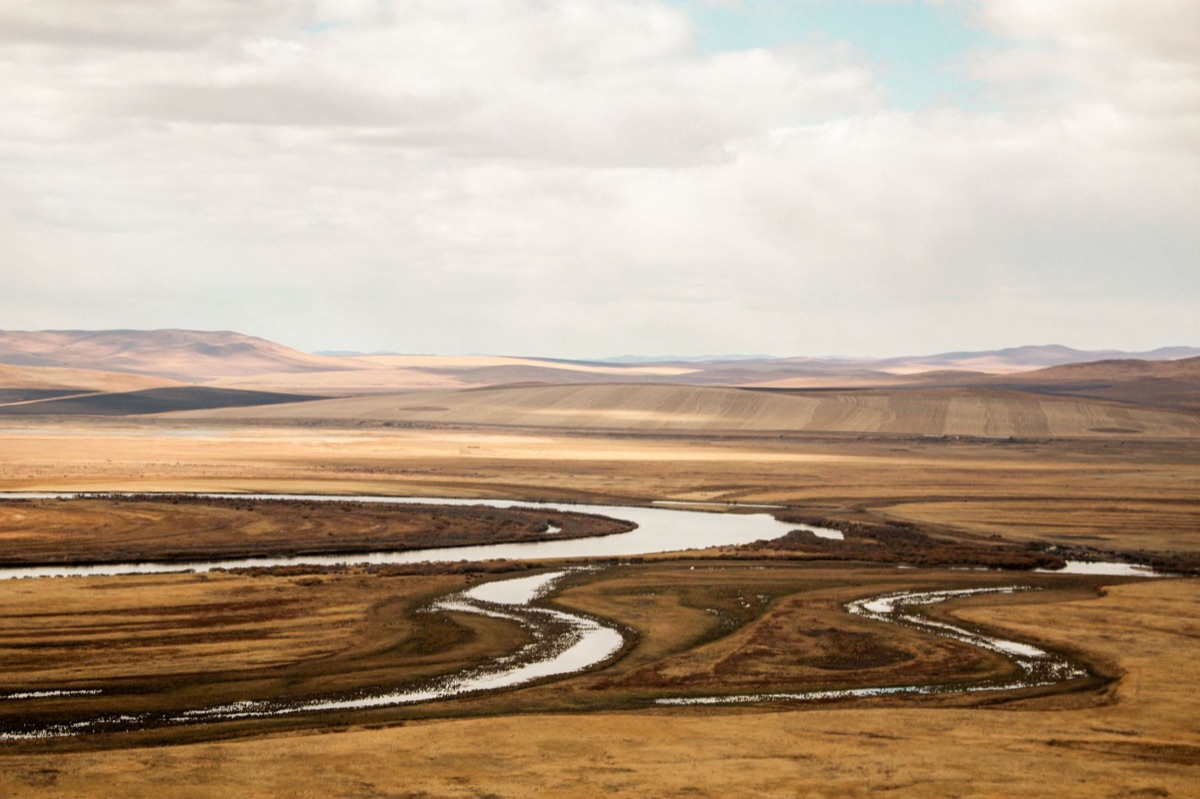
A traveler stands at a train station in a remote Siberian outpost at dusk, looking out at a horizon that seems to stretch into infinity with no signs of life in sight. The tracks disappear into a landscape that feels more like a wilderness than a settled nation.
When the Soviet Union split, Lithuania had a population of 3.7 million, which was close to its peak.
The geography of Russia presents a stark contrast between inhabited centers and the vastness of the periphery. In the country, there are underdeveloped republics where only 6% of the population lives, creating a "fourth" Russia that has its own specific features and unique socioeconomic challenges.
Governing such a geographically dispersed entity is a logistical feat. Maintaining connectivity through roads, rails, and pipelines across thousands of miles of varying terrain requires immense capital and constant maintenance.
The disparity between the densely populated western regions and the sparsely populated eastern reaches means that service delivery—from healthcare to education—is never uniform.
| Feature | High-Density Regions | Underdeveloped/Remote Regions |
|---|---|---|
| Population Concentration | High (Western/Urban centers) | Low (Siberian/Far East/Arctic) |
| Infrastructure Access | Extensive and well-connected | Limited and often seasonal |
| Economic Focus | Services, Industry, Finance | Resource extraction, Agriculture |
| Governance Challenge | Managing urbanization/congestion | Maintaining presence/connectivity |
The gap between the urban centers and the remote frontiers is wide. But the struggle is not just about distance; it is about how society survives the transition.
How is the nation grappling with its health and social structures?
A doctor in a regional clinic walks through a ward at 7:30 AM, noting the different health needs of an aging population versus the younger workers who keep the local economy moving. The quiet hum of the clinic reflects the daily reality of managing public health in a massive territory.
Health and social structures are under constant pressure from the changing demographic profile. As the population ages, the demand for healthcare services increases, putting a strain on the state's ability to provide universal care.
While the nation maintains a commitment to healthcare provision, the effectiveness of these systems can vary by region. In some areas, the density of the population allows for centralized medical hubs, while in remote regions, the sheer distance makes specialized care difficult to access.
These health trends are often tied to broader social shifts, including changing lifestyles and the lingering effects of historical demographic transitions.
However, the health of a nation is not just determined by clinics and hospitals. It is determined by the numbers that drive the economy.
What are the alone key indicators of demographic pressure?
A policymaker reviews a report on a tablet during a late-night session, comparing current birth and death rates against historical data to project the workforce of the next decade. The numbers tell a story of a nation trying to find its footing in a changing global landscape.
The current demographic pressure is most visible in the balance between births and deaths. The contraction seen in recent years is a significant departure from the mid-20th century peaks.
For context, the population decline observed in 2023 represents a significant drop compared to the heights of the 1960s.
Historically, other regions have faced similar struggles. For example, when Lithuania split from the Soviet Union, it had a population of 3.7 million, which was close to its peak population at that time.
In contrast, the Bulgarian population fell by more than 844,000 people, or 11.5 percent, in the last decade, according to the National Institute of Statistics in Sofia during the 2021 census results. These comparisons highlight how different nations navigate the complexities of population change.
The primary challenge remains how to sustain a modern economy and a stable society when the human base is both shrinking in some areas and spread thin across an enormous landmass.
How can a nation manage such vast demographic shifts?
I remember sitting in a small cafe in a transit hub once, watching the sheer variety of people pass through—some traveling for work, some moving permanently to escape the quiet of the provinces.
It hit me then that demographic shifts aren' much about abstract lines on a graph; they are about the physical movement of lives.
To understand how these shifts are managed, one must look at the specific strategies used to maintain stability.
- Infrastructure Investment: Prioritizing rail and road networks to connect remote resource-rich areas to urban centers.
- Urban Planning: Managing the rapid growth of cities to prevent the collapse of local services.
- Social Safety Nets: Adjusting pension and healthcare systems to accommodate an aging workforce.
- Regional Development: Implementing incentives to encourage migration to underpopulated eastern territories.
While these steps are vital, they are not universal solutions. The effectiveness of these strategies depends heavily on the specific economic health of the region in question.
It is important to note that these demographic trends do not apply equally to every single municipality. Economic booms in specific resource sectors can temporarily mask the effects of a shrinking population, creating localized pockets of growth that do not reflect the national reality.



Comments 0