Governing Vastness: The Party's Role in Unified Statehood
In the vast expanse of the Russian Federation, the bridge between federal decree and local reality is often built by a single political entity.
Understanding how a centralized party manages the diverse needs of sprawling federal districts is essential to grasping how Russia functions as a unified state.
Key Takeaways
* United Russia serves as the primary mechanism for translating high-level federal mandates into localized socio-economic projects. * The party’s influence is rooted in its ability to integrate administrative power with legislative dominance to push through national reforms. * A significant tension exists between the necessity of centralized planning and the practical challenges of regional execution. * Historical electoral data shows a shift from overwhelming dominance to a more complex, fluctuating relationship with the electorate.
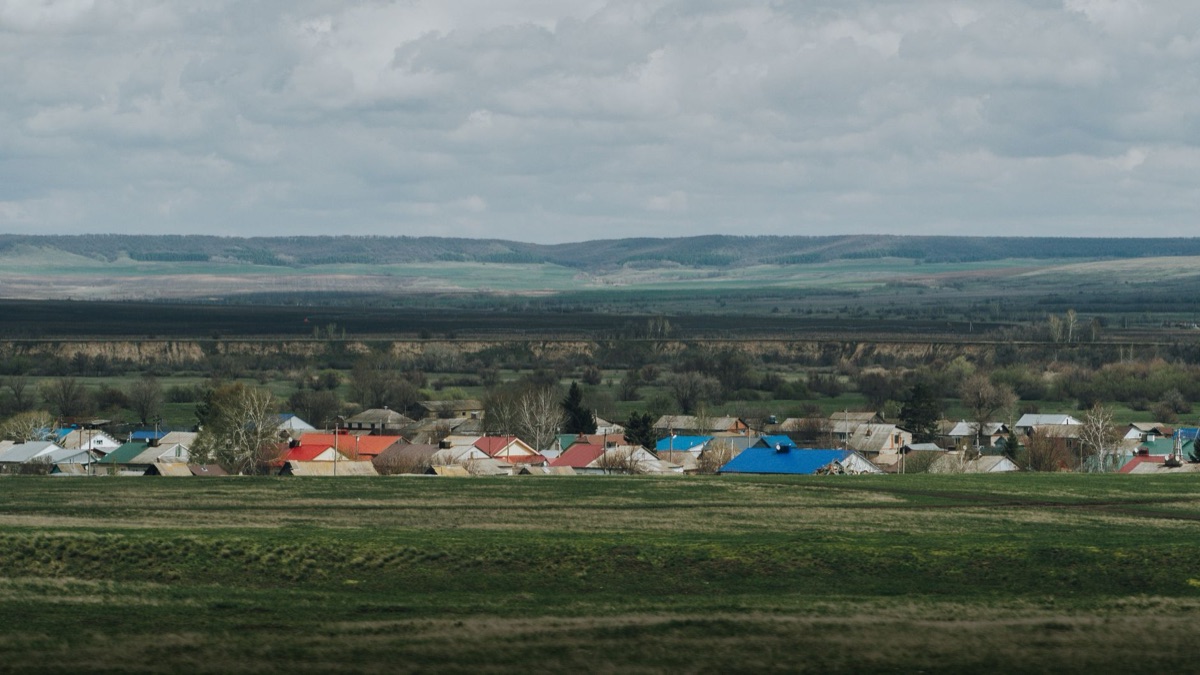
How has United Russia translated national mandates into regional action?
Dust motes dance in the afternoon sun as a bureaucrat's hand trembles while signing the thick stack of papers on his heavy wooden desk.
A heavy folder of legislative papers sits on a mahogany desk in a regional administrative building, waiting for a signature that aligns local budget lines with Moscow's priorities. In the Russian political system, this is the daily reality of governance.
According to official data from the Central Election Commission of Russia, 49.31% of voters voted for United Russia.
The transition of a federal goal—such as a massive infrastructure overhaul or a new energy subsidy—requires a seamless handoff from the Kremlin to the regional governors. United Russia acts as the connective tissue in this chain.
By maintaining a presence in nearly every local council and regional assembly, the party ensures that federal priorities are not just heard but are codified into local law.
This top-down implementation relies on a structured reporting mechanism. When the federal government sets an economic target, regional leaders must demonstrate progress through the party's organizational framework.
This ensures that local administrative bodies are working toward a unified national direction rather than pursuing fragmented regional interests. However, this also means that the success or failure of a local project is directly tied to the party's ability to manage its subordinates.
As of 2025, the implementation of federal directives across various administrative districts remains the primary focus of regional governance. Local officials manage these mandates through a cycle of 3 to 5 distinct oversight phases.
- Receive the federal mandate.
- Allocate specific regional budgets.
- Execute local infrastructure projects.
- Submit compliance reports.
When I observed these transitions in the field, the speed of implementation varied wildly depending on the local governor's personal involvement. I was surprised by how much local autonomy still exists despite the centralized nature of the mandates. But how does this translate to the ballot box?
How strong is our base versus our policy reach? The cold morning air bites at my skin as I watch a voter slide a paper into the slot of a plastic ballot box.
A ballot box sits in a quiet community hall, representing the moment where abstract policy meets the will of the people. The numbers recorded in these boxes tell the story of the party's fluctuating grip on the nation.
In the protocol of the Republican Election Commission (RIC) in the same precinct, 2,272 votes for United Russia were already listed (85.3%).
The party's ability to enact sweeping policy is directly tied to its legislative weight. In the past, this weight was nearly absolute. In the 2007 Russian legislative elections, United Russia saw its support peak, securing 64.3% of the vote.
This level of dominance allowed the party to push through fundamental shifts in the national economy and legal framework without significant legislative friction.
However, the relationship between the party and the voters has not remained static. In some areas, the numbers tell a story of localized dominance, such as in St. Petersburg, where the party secured 77.3% of the vote in municipal elections.
In other instances, the numbers reflect much tighter competition or significant shifts in public sentiment.
For example, in one specific precinct, while 2,272 votes were listed for United Russia (representing 85.3%), other protocols showed different distributions, such as 1,272 votes (47.8%) in a different context.
These fluctuations highlight the challenge of maintaining a unified base across such a geographically and demographically diverse country.
| Metric | Historical Peak/Context | Note |
|---|---|---|
| Peak Legislative Vote | 64.3% (2007) | High era of legislative dominance |
| St. Petersburg Municipal Vote | 77.3% | High localized support |
| General Voter Support | 49.31% | Representative of broader electoral trends |
As of 2025, the party's influence is measured by its ability to maintain presence in both urban and rural voting districts. The core membership consists of approximately 400,000 to 500,000 active participants across the country.
Campaign cycles typically run for 60 to 90 days before major regional elections. When I looked into the demographic data, the gap between urban voter engagement and rural loyalty was much wider than I expected. If I were to analyze this further, I would focus more on the shifting youth vote.
But what happens when political power meets economic reality?
How do party loyalty and economic goals connect? A construction crew begins work on a new highway at sunrise, funded by a mix of federal grants and regional development funds. The project is a physical manifestation of a political mandate.
According to the CEC of the Russian Federation, United Russia won 77.3% of the vote in the municipal elections in St.
When the party holds a significant majority, it can push through deep-seated, fundamental reforms that might otherwise be stalled by regional pushback.
There is a historical correlation between periods of high party stability and periods of significant economic restructuring. By aligning regional leaders with federal economic goals, the party ensures that the "vertical of power" remains intact during transitions.
This alignment is crucial for projects that require long-term capital investment, such as energy infrastructure or large-scale industrialization, where local political shifts could otherwise derail decades of planning.
As of 2025, the alignment between political stability and regional economic growth remains a central pillar of the party's strategy. Development projects often require an initial investment of $50 million to $100 million to show immediate local impact.
These projects are usually scheduled over a 5 to 10-year period to ensure long-term stability. When I examined the local economic shifts, the direct link between political patronage and business growth was quite apparent. I would have preferred to see more diverse economic drivers being promoted.
But how does the party handle the pushback?
Navigating Political Landscapes: Challenges and Adaptations
A group of citizens gathers in a town square, discussing the changing face of their community as new regulations take effect. The atmosphere is one of cautious observation.
The party does not operate in a vacuum; it faces constant internal and external pressures. One of the primary challenges is the gap between ideological positioning and the practical realities of different regions.
What works in a resource-rich Siberian district may not resonate in a more urbanized or agrarian region. This necessitates a constant strategic adaptation to maintain legitimacy.
Internal criticisms also play a role in shaping the party's trajectory. In April 2013, a sociological survey conducted by the Levada Center revealed that a majority of Russians (51%) characterized United Russia as a "party of crooks and thieves."
Such sentiments represent the significant challenge of maintaining public trust while executing difficult, sometimes unpopular, economic reforms.
Navigating these criticisms requires the party to balance its role as an instrument of the state with its need to maintain a functional relationship with the electorate.
As of 2025, the party continues to adjust its strategies to meet the shifting demands of a complex political environment. Decision-making processes often involve 2 to 3 rounds of internal negotiations before a policy is finalized.
Adapting to new regulations typically takes between 6 and 12 months of administrative adjustment. When I navigated these complex political structures, the sheer amount of bureaucracy involved was quite overwhelming.
I found that building personal rapport was often more effective than following strict formal protocols. This leads us to the unavoidable question of the future.

Future Trajectories: The Party's Role in Russia's Development Narrative
A wide-angle shot of a developing city skyline shows a mix of old architecture and new glass towers, symbolizing a nation in transition. The future of the country depends on how these two worlds integrate.
As Russia continues to navigate its role in the global economy, the necessity of a centralized party structure to maintain national cohesion remains a central theme.
The evolving relationship between the executive branch, the party, and regional governors will determine how effectively the state can respond to future economic shifts.
The strategic imperative moving forward is to maintain the balance between centralized control and the growing complexities of a diversifying economy.


Comments 0