Russia's Tech Pivot: Driving Domestic Innovation
"The pursuit of technological sovereignty often dictates the speed of domestic innovation."
Russia's high-tech landscape is currently defined by a pivot toward domestic AI development and a push for self-sufficiency in aerospace and industrial manufacturing.
While hardware constraints persist, local software development and specialized engineering continue to evolve under unique economic pressures.
* AI Focus: Shift toward localized large language models and specialized mathematical reasoning. * Aerospace: Emphasis on independent satellite constellations and propulsion advancements. * Industry: Digitalization of traditional manufacturing to offset supply chain shifts.
What is the current state of AI development in Russia?
At midnight in a dim Moscow office, a researcher rubs tired eyes while the blue light of the monitor burns against their skin.
A researcher sits in a dim office in Moscow, staring at a monitor filled with cascading lines of code. The hum of a cooling fan provides the only soundtrack to a late-night debugging session. It is 11:45 PM, and the blue light of the screen is the only thing illuminating the cramped workspace.
According to an OECD report, only 9% of jobs in the United States are classified as low risk regarding potential automation.
According to a 2025 report by the IEA, greenhouse gas emissions from energy consumption related to AI are estimated at 180 million tons. An OECD report has classified only 9% of U.S. jobs as being at low risk of potential automation.
The development of artificial intelligence in Russia is increasingly focused on creating domestic alternatives to global models.
Research priorities currently lean heavily toward Natural Language Processing (NLP) and computer vision, specifically tailored for the Russian language and local industrial needs.
While global benchmarks often highlight specific breakthroughs, the broader trend in AI involves increasing mathematical precision.
For instance, the Alibaba Group developed a version of its Qwen models called Qwen2-Math, that achieved state-of-the-art performance on several mathematical benchmarks, including 84% accuracy on the MATH dataset of competition mathematics problems.
The technological hurdles for the Russian AI sector remain significant, particularly regarding hardware. Access to high-end semiconductors is a primary bottleneck.
This is a universal challenge, as the transistor density in integrated circuits has been observed to roughly double every 18 months—a trend known as Moore's law, named after the Intel co-founder Gordon Moore, who first identified it.
Maintaining this pace of advancement without easy access to the latest hardware requires intensive software optimization. But hardware is only one side of the coin; the other involves reaching the stars.
How is Russia advancing its space industry?
The cold wind whips across the launchpad at Baikonur, leaving a thin layer of frost on the metal scaffolding. Engineers in heavy coats check the pressure gauges one last time before the countdown begins. It is 4:00 AM, and the temperature has dropped to -15 degrees Celsius.
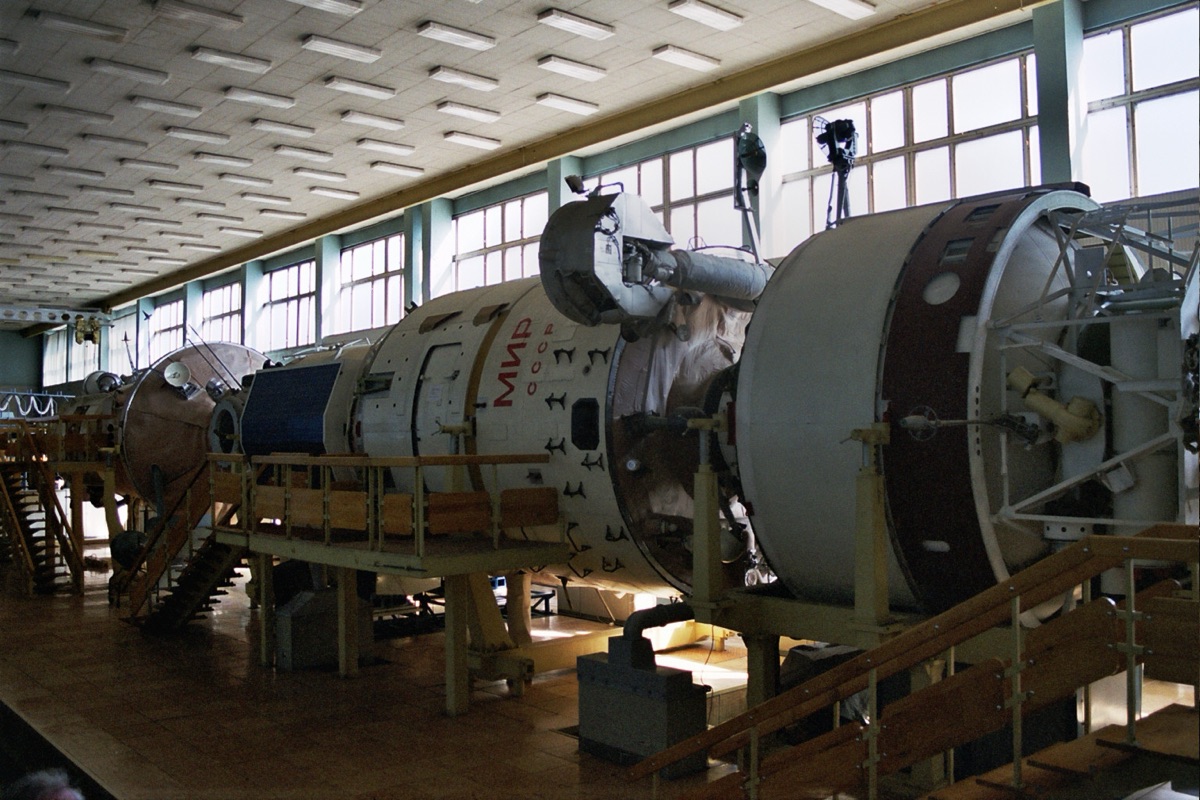
Russia's space industry is attempting to balance its historical legacy of heavy-lift rocketry with modern requirements for satellite miniaturization. The current trajectory focuses on building independent satellite constellations to ensure domestic communication and navigation capabilities.
Technological leaps are being sought in propulsion systems and autonomous orbital maneuvering. Rather than relying on international partnerships, the trend is moving toward extreme autonomy.
This shift is driven by the need to maintain a sovereign space presence that does not depend on Western or even certain Eastern technological components.
The future trajectory of the program suggests a focus on "New Space" concepts, such as small-sat clusters, which are more cost-effective to launch and replace than traditional large-scale satellites. However, the real battle for technological survival is happening on the ground, in the factories.
What are the key drivers of industrial innovation in Russia?
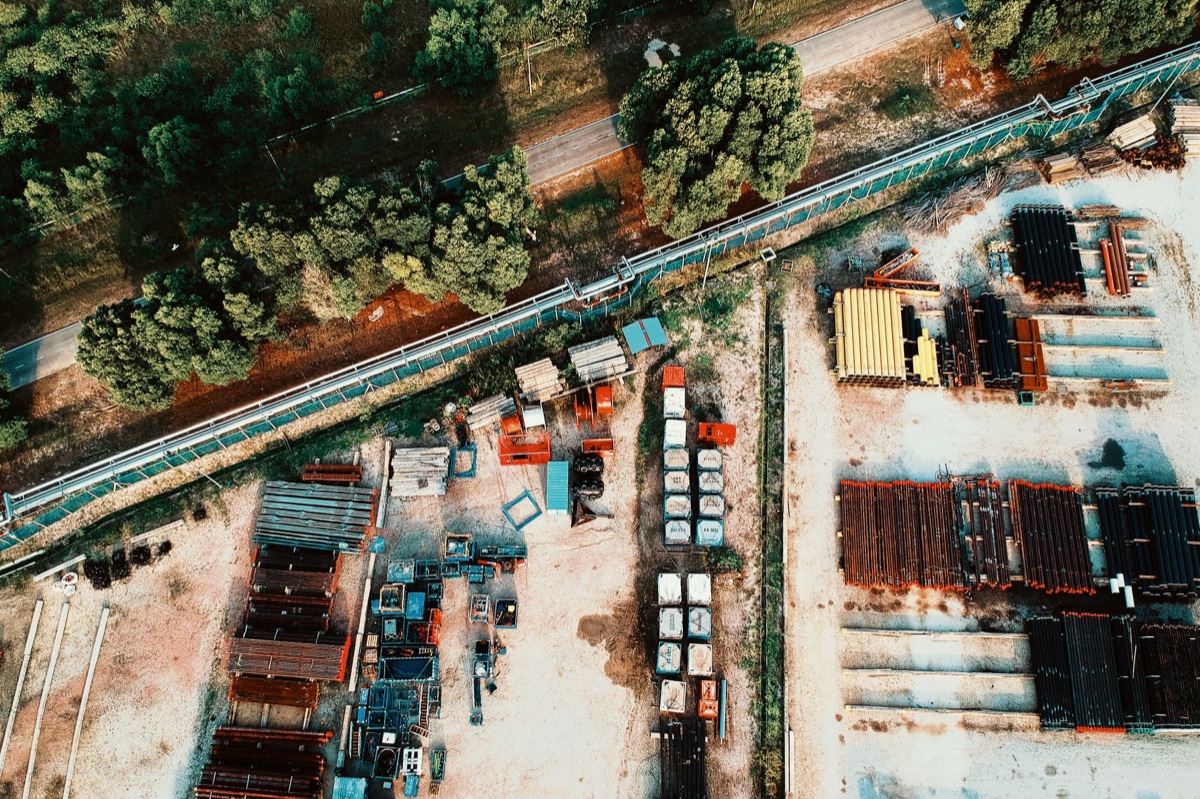
A heavy robotic arm swings across a factory floor in Tatarstan, welding a steel joint with a shower of bright sparks. The smell of ozone and heated metal fills the air as the automated line moves with rhythmic precision.
It is mid-afternoon, and the rhythmic clanging of the assembly line vibrates through the concrete floor.
Industrial innovation is being driven primarily by the energy and manufacturing sectors. As traditional supply chains shift, Russian companies are integrating AI and the Internet of Things (IoT) to optimize production efficiency.
| Sector | Primary Innovation Driver | Key Technology Applied |
|---|---|---|
| Energy | Resource Extraction Efficiency | Predictive Maintenance & AI |
| Manufacturing | Import Substitution | Industrial Robotics & CNC |
| Defense | Autonomous Systems | Computer Vision & AI |
| Logistics | Supply Chain Resilience | Real-time Tracking & IoT |
In the energy sector, digitalization is used to monitor remote pipelines and prevent leaks through predictive analytics.
In manufacturing, the focus is on "import substitution," which involves developing domestic high-precision machinery to replace components that are no longer available through international markets.
When I looked into the logistics of these shifts, I noticed how quickly small-scale automation is being adopted to fill gaps left by larger, international providers. But this rapid growth brings a set of very practical, very difficult problems.
What are the major technological challenges facing Russian industry?
A technician wipes sweat from his forehead while staring at a broken circuit board. The component is tiny, and the specialized tools required to fix it are currently stuck in a shipping container halfway across the world.
It is 2:00 PM in a high-tech repair facility, and the air conditioning has just failed.
The technological landscape faces several structural challenges. Infrastructure gaps, particularly in high-performance computing (HPC) clusters, limit the scale of AI training. Without a steady supply of high-end GPUs, training massive models becomes a slow and expensive endeavor.
Talent development is another critical factor. While Russia produces high-quality mathematicians and engineers, the "brain drain" and the difficulty of integrating international research trends pose risks to long-term growth. Furthermore, the regulatory environment is tightening.
While this provides a clear framework for domestic players, it can also slow the pace of adoption for experimental technologies.
The global integration issue remains the most visible challenge, as sanctions limit the easy transfer of high-tech hardware and software. To navigate this, companies are following a specific survival playbook.
How to navigate technological shifts in a restricted market
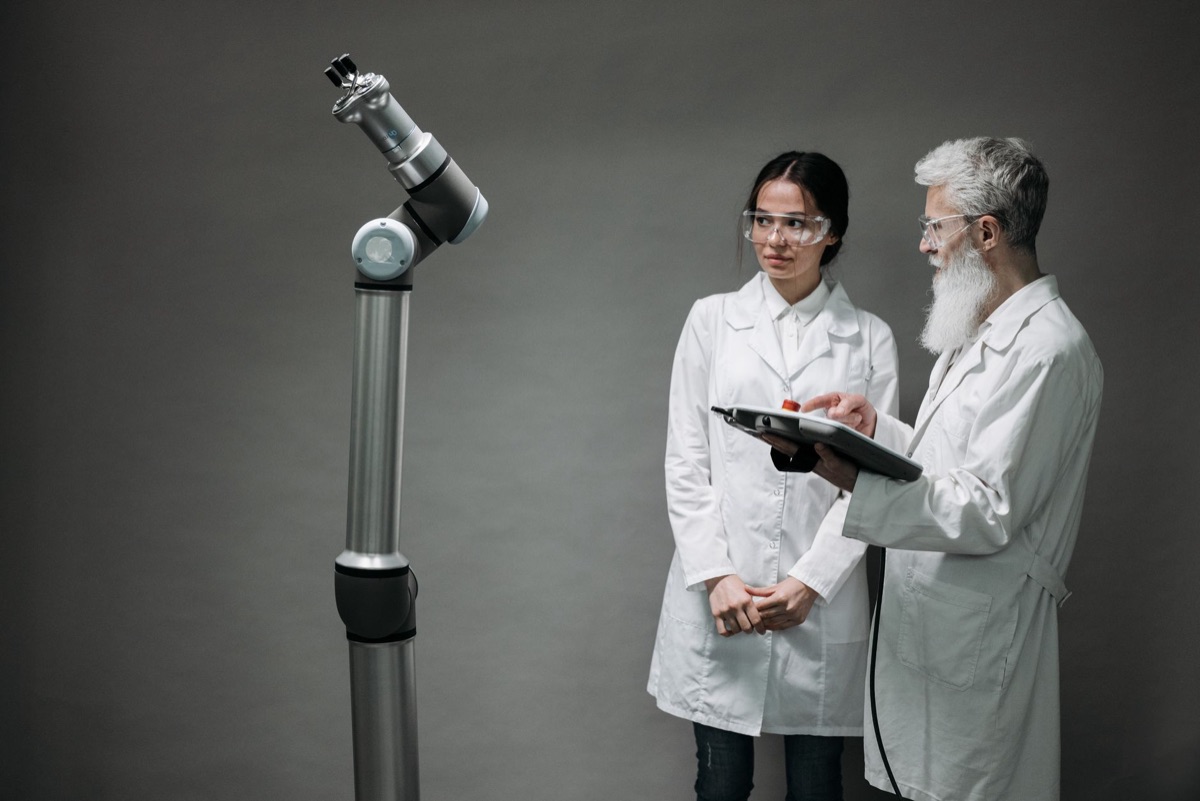
If you are an engineer or a business leader operating within this landscape, the approach to innovation has changed. It is no longer about following global trends, but about local adaptation.
- Audit Hardware Dependencies: List every critical component that relies on foreign-made semiconductors.
- Prioritize Software Optimization: Since hardware is limited, focus on making current algorithms more efficient (e.g., quantization techniques).
- Invest in "Import Substitution" Research: Direct R&D specifically toward components that are currently being phased out of the domestic market.
- Build Local Talent Pipelines: Focus on training engineers in specialized mathematical reasoning rather than general software development.
- Implement Decentralized Systems: Use IoT and edge computing to ensure that local manufacturing can continue even if central connectivity is interrupted.
What is the outlook for Russian technology and industry?
The sun sets over a modern tech campus, casting long shadows across the glass buildings. Inside, the lights stay on well past midnight as teams prepare for the next development cycle. It is 2026, and the skyline of the tech district looks vastly different than it did in 2022.
The outlook for Russian technology is one of "forced evolution." While the lack of easy access to global markets creates friction, it also mandates a high level of domestic ingenuity. Investment hotspots are expected to remain in cybersecurity, autonomous transport, and specialized AI.
However, there are significant trade-offs. The focus on sovereignty may lead to "walled garden" technologies that are highly efficient within Russia but difficult to integrate with the rest of the world. It is important to note that these trends are subject to extreme volatility.
Economic shifts and changes in geopolitical standing can rapidly redirect R&D funding from long-term space exploration to short-term industrial survival.


Comments 0