Stable Growth: Russia's Economic Trajectory in 2026
"Is the shrinking share of energy exports a sign of a maturing economy, or a warning of a new crisis?"
Russia is currently navigating a structural shift to reduce its reliance on energy, even as international uncertainty persists. While energy's role in the national budget is declining, the economy is maintaining a modest growth trajectory.
Key Takeaways * Energy Diversification: The oil and gas sector's share of federal budget revenue dropped to 30% in 2024, down from 50% in the mid-2010s. * Growth Trends: According to the IMF, Russia's real GDP growth was 1.1% in 2026.
* Economic Stability: The nation utilizes a floating exchange rate and maintains significant foreign exchange reserves. * Historical Context: The economy has transitioned from extreme hyperinflation in the early 1990s to a more structured, albeit uneven, modern system.
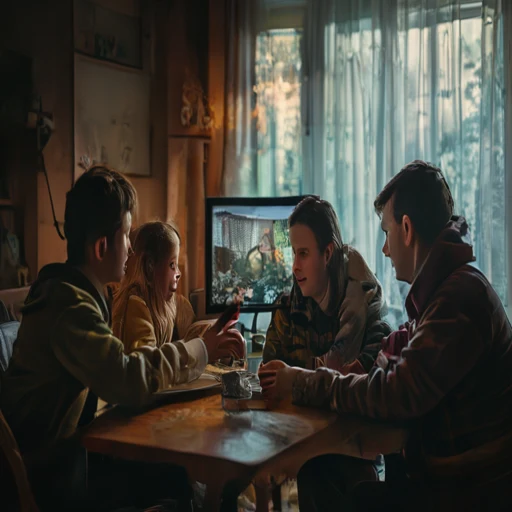
Is my energy dependence actually decreasing? At midnight in the quiet kitchen, I sip bitter coffee while watching the blue light of the screen flicker against the wall.
I sit at my kitchen table late in the evening, the blue light of my laptop illuminating a half-finished cup of coffee. Outside, the city lights flicker, but my focus is on the shifting percentages of a nation's wealth.
It is difficult to ignore how much energy has traditionally anchored this landscape.
In previous decades, energy was the undisputed engine of growth. Between 2000 and 2012, energy exports drove a massive surge in living standards, with real disposable income rising by 160%.
The dominance of this sector was clear; in 2012, oil, gas, and petroleum products accounted for more than 70% of total exports [T10].
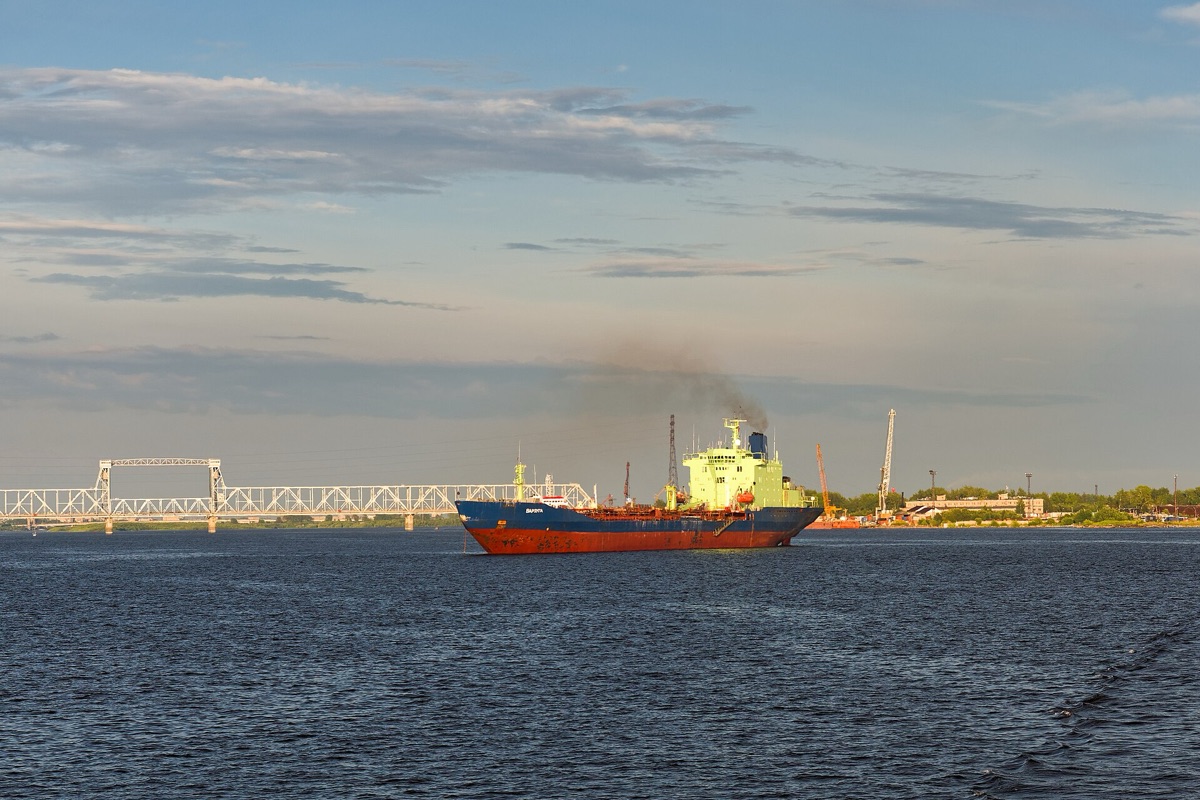
However, the recent data suggests a pivot. The large oil and gas sector accounted for up to 30% of Russia's federal budget revenues in 2024, which is a notable decrease from the 50% seen in the mid-2010s.
This shift could be interpreted as a sign of successful economic diversification, though it remains to be seen if this transition will create a more resilient foundation for the future. But the question of what replaces that energy is more complex than it appears.
What is currently driving my economy? I tap a heavy pen against the desk in the dim office, feeling the cold surface of the printed reports beneath my palm.
I tap my pen against a stack of printed reports, staring at a series of line graphs that refuse to spike upward. The numbers are steady, but they lack the explosive energy of the early 2000s. I notice that while the market is vast, the momentum is measured.
The current pace of expansion is relatively subdued. According to the IMF, Russia's real GDP growth was 1.1% in 2026. While this is far from the high-growth era of the past, it provides a baseline for understanding how the economy is holding up under current global pressures.
To understand this stability, one must look at the broader regional context. The EAEU operates a Eurasian Customs Union that provides an integrated single market of 183 million people. This regional integration offers a different kind of scale than the energy-driven growth of the past.
The history of this economy is also marked by extreme volatility. In January 1992, prices increased by 300%, and they climbed as much as 1,000% within the first three months of that year. The total inflation rate for 1992 reached 2,509%.
Moving from those chaotic years to the current structured environment required significant institutional changes. However, these structural changes have not necessarily translated to equal prosperity for every citizen.
Why is wealth distribution so uneven?
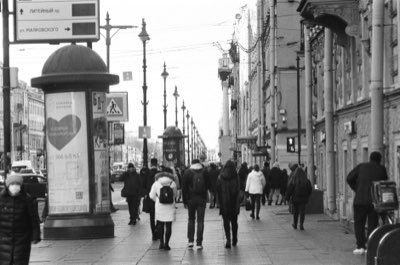
I watch the crowd on the subway during my evening commute, noticing the stark contrast in how people carry themselves. Some travelers check high-end smartphones with ease, while others look weary, navigating the daily grind of rising costs.
It is a reminder that a rising GDP does not always mean a rising tide for everyone.
Even during periods of significant growth, the benefits have not been shared equally. A report by Credit Suisse found that the 110 wealthiest individuals owned 35% of all financial assets held by Russian households.
The limits of the old economic model have also become apparent over time. After years of strong performance, the economy expanded by a mere 1.3% in 2013 [T11]. This slowdown was echoed in 2014, when the Russian economic ministry reported that GDP growth in the first half of 2014 was only 1% [T12].
These figures suggest that relying solely on resource extraction has an inherent ceiling. Yet, despite these uneven distributions, certain mechanisms have been built to prevent total collapse.
Comparison of Economic Indicators
To better understand the transition, we can look at how the primary drivers of the economy have shifted over the last decade.
| Indicator | Mid-2010s Era | 2024–2026 Era | Context |
|---|---|---|---|
| Energy's Share of Budget | ~50% | Up to 30% | Indicates diversification efforts |
| Real GDP Growth | Higher Volatility | 1.1% in 2026 | Shift toward stability/slower growth |
| Export Composition | >70% Energy [T10] | Diversifying | Moving away from petroleum dominance |
What mechanisms ensure economic stability?
I spread several documents across my desk, the paper smooth under my hands as I cross-reference exchange rates with reserve levels. It is late, and the silence of the room makes the gravity of these figures feel more intense.
There is a sense of a built-in defense system designed to absorb external shocks.
The current economic structure relies on several sophisticated pillars. As the IMF reported in 2016, Russia has a floating exchange rate, large official foreign exchange reserves, a positive net international investment position of about 20 percent of GDP, and a current account surplus.
These safeguards are the result of reforms dating back to the turn of the millennium.
Between 2000 and 2002, significant pro-growth economic reforms included a comprehensive tax reform, which introduced a flat income tax of 13%, alongside deregulation that benefited small and medium-sized enterprises.
These changes helped move the needle on social stability; for instance, the number of people living below the poverty line declined from 30% in 2000 to 14% in 2008.
How should we view the future outlook?
I look out the window at the rain streaking the glass, wondering how these structural changes will play out in the next decade. The transition from an energy-based economy to a diversified one is rarely a smooth line; it is usually a series of jagged adjustments.
For sustainable growth, the economy must continue to reduce its energy dependence while simultaneously addressing the wealth gap and modernizing its industrial base.
The reduction in energy's budget share is a positive signal, but the true test is whether new industries can generate similar levels of value.
Steps to monitor economic health:
- Track Export Diversity: Watch for an increase in non-energy goods within the total export volume.
- Monitor Macro Stability: Observe how the floating exchange rate and foreign reserves react to global market shifts.
- Analyze Domestic Consumption: Evaluate if deregulation and credit access continue to support small businesses and consumer spending.
- Assess Regional Integration: Monitor the utilization of the 183 million-person market within the EAEU.


Comments 0